
Container Gardens
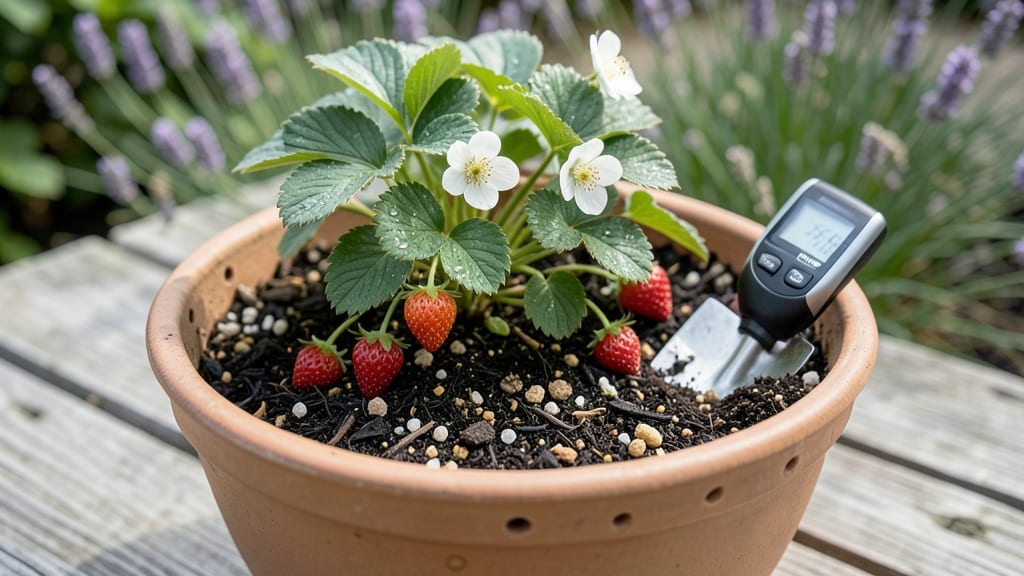
The best soil for strawberry plants in containers blends 60% peat or coconut coir, 20% perlite or vermiculite, and 20% compost or aged manure to ensure moisture retention, aeration, and nutrient availability while preventing root rot. A slightly acidic pH (5.5–6.5) is ideal for optimal growth.
The right soil mix is all about balance—strawberries need to drink but hate soggy roots. 🌱 A good blend keeps moisture available without suffocating roots, while the slightly acidic pH helps them absorb nutrients efficiently.
I've found that adding worm castings to the compost boosts growth even further, giving those berries a juicier finish. For containers, this mix prevents compaction that can strangle roots over time, which is especially important in small spaces where drainage gets tricky.
If you're using coconut coir instead of peat, just make sure it's well-rinsed first—some brands leave behind salts that can harm tender strawberry roots. And don't forget to test your pH! Most garden centers sell simple test kits for under $10. 💫
💡 In This Article
- Why Strawberries Thrive in Well-Aerated, Moisture-Retentive Soil
- DIY Container Soil Mix Recipes for Strawberry Plants
Why strawberries thrive in well-aerated, moisture-retentive soil
Strawberry roots are shallow and fibrous, spreading horizontally just below the soil surface. This means they need a soil mix that holds moisture near the surface while still allowing oxygen to reach the roots—a delicate balance.
The 60% organic base (peat or coconut coir) acts like a sponge, retaining water and nutrients while breaking down slowly to feed the plants. Think of it as a reservoir that releases hydration gradually, preventing both drought stress and waterlogged conditions that lead to root rot.
Here's where the 20% perlite or vermiculite comes into play. These mineral additives create tiny air pockets throughout the mix, preventing compaction that would suffocate roots. Perlite expands when heated, forming lightweight, porous structures that improve drainage, while vermiculite holds onto water and nutrients like a magnetic field.
Together, they mimic the loose, crumbly texture of forest soil where wild strawberries grow—ideal for container gardening where drainage is often limited. 🌱
The final 20% compost or aged manure introduces beneficial microbes and slow-release nutrients that strawberries crave. These microbes form symbiotic relationships with roots, helping them absorb phosphorus and nitrogen more efficiently. Without this organic matter, strawberries would struggle to produce energy for fruit development, resulting in smaller, less flavorful berries.
The compost also improves soil structure over time, making it easier for roots to explore their container environment.
pH levels matter because strawberries are sensitive to soil acidity. At 5.5–6.5, the roots can efficiently absorb essential nutrients like iron, manganese, and zinc—deficiencies often show up as yellow leaves or stunted growth. Below 5.0, aluminum toxicity becomes a risk, while above 7.0, phosphorus becomes locked away.
Most store-bought potting mixes sit around 6.5, but adding compost can lower pH slightly, so testing is key.
One often-overlooked factor is the soil's capillary action—how well it draws water upward from the bottom of the container. A mix with too much sand would drain too quickly, while one with too much clay would hold water like a swamp.
The ideal blend keeps moisture within 1-2 inches of the surface, perfect for strawberries whose roots spread horizontally. This is why I recommend adding a 1-inch layer of coarse sand at the bottom of containers—it improves drainage without sacrificing moisture retention.
For container growers, this soil science translates directly to bigger harvests. I've seen strawberry plants in poorly aerated soil produce 30% fewer berries due to stress, while those in the right mix thrive with 2-3 inches of new growth per week during spring.
The key is mimicking nature's loose, nutrient-rich environment in a confined space. 💫