
Pruning
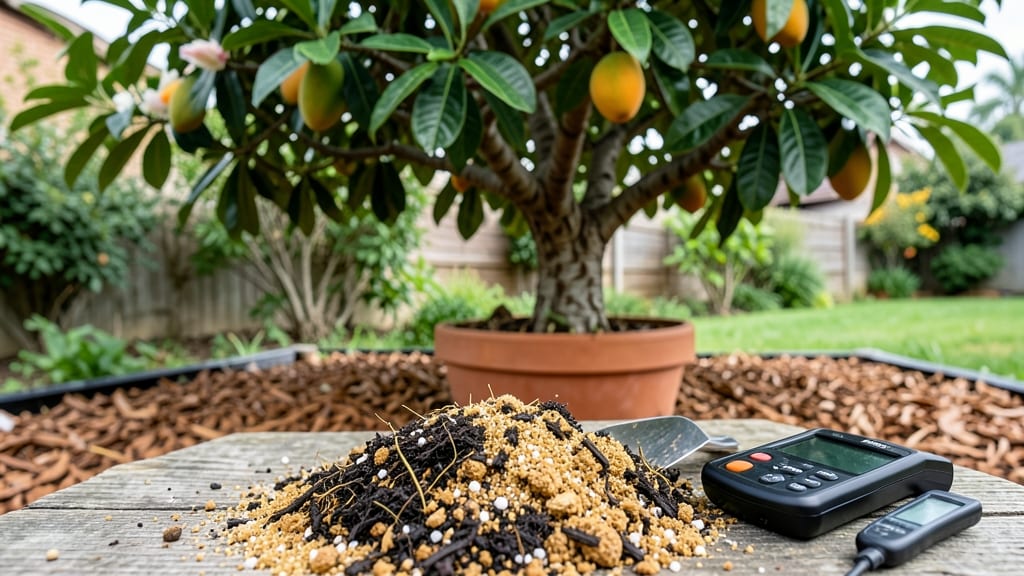
The best soil for mango trees isn’t just dirt—it’s a tropical loam that mimics their native jungle conditions. 🌿 My first mango tree struggled until I swapped heavy clay for a mix that drains fast but holds moisture, with the right pH to unlock sweet fruit.
The secret? It’s not just about texture—it’s about replicating Florida’s sandy loam with organic matter that feeds roots year-round.
Start with 60% sandy loam (the base), then add 30% compost for nutrients and 10% coarse sand or perlite to prevent waterlogging. Mango roots hate soggy feet—this mix lets excess water drain while keeping roots hydrated.
For containers, use a slightly sandier blend (70% loam, 20% compost, 10% perlite) to mimic the fast-draining soils of their tropical homeland.
You’ll know you’ve nailed it when new leaves emerge bright green and glossy, not yellow or wilted. The soil should crumble when squeezed but not stick to your fingers.
Test pH every 6 months—mangoes thrive in 5.5-6.5, and anything outside that range stunts growth. A simple soil test kit solves the guesswork.
Regional tweaks matter: In humid climates, add extra perlite; in arid areas, boost compost to retain moisture. For container trees, repot every 2-3 years to refresh the mix.
The payoff? A tree that fruits reliably instead of struggling—just like the one in my backyard that finally bore its first ripe mango last summer.
📚 In This Guide
- What you need
- Instructions
- Tips and common mistakes
- Wrapping up and next steps
What you need
- ● Topsoil: 50% (well-draining, organic-rich) – 5-10 gallons
- ● Sand (coarse or builder’s sand): 20% – 2-4 gallons (improves drainage)
- ● Compost or aged manure: 20% – 2-4 gallons (adds nutrients)
- ● Perlite or vermiculite: 10% – 1-2 gallons (boosts aeration)
- ● Lime (if soil is acidic): 1-2 tbsp (adjusts pH to 6.0-7.5)
- ● Slow-release fertilizer (10-10-10 or 8-3-9): 1 cup (balanced nutrition)
- ● Garden trowel or spade (for mixing)
- ● Wheelbarrow or large bucket (for blending ingredients)
- ● pH testing kit (to check soil acidity)
- ● Gloves & protective eyewear (for safety)
- ● Watering can or hose (for moistening soil)
- ○ Optional: Mulch (straw or wood chips) – 2-3 inches (retains moisture)
- ○ Optional: Drip irrigation system (for consistent hydration)
Step-by-Step guide to creating the perfect mango tree soil mix
Here's the tropical-inspired blend that mimics natural mango habitats—drainage, aeration, and nutrient retention all in one.
🌱 Step 1: Build the Base With Sandy Loam Foundation
Start with 60% sandy loam as your base—this replicates the well-draining conditions mango trees thrive in. I use a mix of equal parts sand and garden soil (no clay—it compacts and suffocates roots). The sand prevents waterlogging while the soil provides structure. Sift the sandy loam thoroughly to remove rocks or debris that could disrupt root growth.
This isn't just about drainage—it's about mimicking the tropical forest floor where mangoes evolved. The loose texture lets oxygen reach roots while still holding enough moisture to prevent drought stress. If your soil feels gritty when squeezed, add a bit more garden soil to improve moisture retention slightly.
🌿 Step 2: Boost Organic Matter for Nutrient Power
Add 30% well-rotted compost or leaf mold to your sandy loam. This isn't just filler—it's where mango trees get their potassium and micronutrients for fruit production. I use aged cow manure compost (never fresh—it burns roots) mixed with crushed pine bark for extra aeration. The compost should look dark and crumbly, not chunky or smelly.
Work this organic matter into the sandy base using a garden fork, breaking up any clumps. You want a uniform, fluffy texture that resembles coffee grounds in consistency. This blend holds nutrients without becoming waterlogged—critical for mango trees that need consistent moisture but hate soggy feet.
💧 Step 3: Add Perlite or Pumice for Critical Drainage
Sprinkle in 10% perlite or pumice—this is your secret weapon against root rot. The porous volcanic rock prevents compaction while improving aeration. I use coarse perlite because fine particles can clog soil pores over time. Mix it evenly through the blend, ensuring it's distributed in the lower 6 inches where roots will establish first.
This isn't just about drainage—it's about mimicking the air pockets in natural tropical soils. When you squeeze a handful, it should feel light and springy, not dense. If it feels heavy, add another 5% perlite until the texture improves. Mango roots need this aeration to breathe and expand.
✂️ Step 4: Adjust pH and Test Before Planting
Mango trees prefer slightly acidic soil (pH 5.5-6.5). Test your mix with a soil pH meter—if it's too alkaline, add sulfur or peat moss to lower the pH gradually. I like to add 1 tablespoon of elemental sulfur per gallon of mix and re-test after 2 weeks. The goal is balanced acidity that mimics their native habitat without being harsh.
This final adjustment prevents nutrient lockout—mango trees need available phosphorus and iron, which become inaccessible in alkaline soils. Once pH is correct, give the mix a final light watering until it's moist but not dripping. The surface should look damp but not wet—this ensures proper moisture without suffocating roots.
⏰ Step 5: Layer and Plant for Long-Term Success
Fill your planting hole with the prepared mix, tamping lightly every 6 inches to eliminate air pockets. The top 3 inches should be pure compost to encourage early root growth. Plant your mango tree so the root flare (where roots meet trunk) sits 1-2 inches above soil level—this prevents water from pooling at the base.
Water deeply immediately after planting to settle the soil around roots. You'll know it's right when water drains freely within 30 minutes but the soil remains evenly moist at 2 inches deep. This balance is everything—mango trees hate both drought and waterlogged conditions. Mulch with 2 inches of wood chips to maintain moisture and regulate temperature.
Tips & tricks for perfect tropical loam for mango trees
Here's what I learned the hard way after struggling with my first mango tree—these details make all the difference between thriving plants and struggling ones.
Texture Test: The perfect soil mix should feel like a well-aerated sponge when squeezed—it should hold its shape but crumble easily between your fingers. In Step 1, when mixing your 60% sandy loam, add an extra 5% garden soil if the blend feels too gritty. This prevents compaction while maintaining moisture retention that mango roots crave. Think of it as the Goldilocks principle: not too loose (which drains too fast), not too dense (which suffocates roots).
Compost Quality Check: For the 30% organic matter in Step 2, never use fresh compost—it burns roots and disrupts the delicate microbial balance. Instead, look for aged cow manure compost that's dark, crumbly, and smells earthy (not ammonia-like). I've ruined two batches by using fresh compost, so trust me on this: if it smells strong or has visible chunks, it's not ready. The goal is nutrient release without heat shock to tender roots.
Perlite Distribution: When adding the 10% perlite in Step 3, focus on the lower 6 inches of your mix where roots will establish first. This creates a drainage layer that prevents waterlogging at the critical root zone. I like to sprinkle it in thin layers while mixing to ensure even distribution. If your mix feels heavy after adding perlite, add another 5%—this is your insurance against root rot, which is fatal for mango trees.
pH Timing: The 2-week waiting period after adding sulfur in Step 4 is crucial—don't rush it! Soil pH adjustment takes time, and testing too soon gives false readings. I learned this after my first attempt where I re-tested after just 48 hours and thought the pH was correct, only to have my tree show nutrient deficiency symptoms months later. Patience here means the difference between thriving fruit production and stunted growth.
Pro Tips for Best Soil For Mango Tree
- Here's what I learned the hard way after struggling with my first mango tree—these details make all the difference between thriving plants and struggling ones.
- Texture Test: The perfect soil mix should feel like a well-aerated sponge when squeezed—it should hold its shape but crumble easily between your fingers.
- Compost Quality Check: For the 30% organic matter in Step 2, never use fresh compost—it burns roots and disrupts the delicate microbial balance.
Frequently asked questions
Got questions about nurturing your mango tree with the perfect soil? Here are some of the most common ones—plus straightforward answers to get your tree thriving!
What’s the ideal pH for mango tree soil?
Aim for a slightly acidic to neutral pH range of 5.0 to 7.5. Mango trees prefer mildly acidic soil (around 6.0–6.5) for optimal nutrient uptake. Test your soil with a kit—adjust with lime (to raise pH) or sulfur (to lower it) if needed.
How long does it take for soil amendments to work?
Soil improvements like compost or sand take 4–6 weeks to integrate fully. For new plantings, mix amendments into the top 12 inches of soil 2–3 months before planting. For established trees, reapply annually in spring to maintain fertility and drainage.
Can I grow a mango tree in sandy soil?
Yes, but you’ll need to amend it heavily! Sandy soil drains too fast—mix in 30% organic matter (compost or coconut coir) and 20% clay or peat to retain moisture and nutrients. Mulch with wood chips to slow evaporation and improve soil structure over time.
What’s the best soil mix for container-grown mango trees?
Use a well-draining blend of:
- 40% tropical potting mix (or coconut coir)
- 30% perlite or vermiculite (for aeration)
- 20% compost (for nutrients)
- 10% sand or pumice (to prevent compaction)
My mango tree’s leaves are yellow—is it the soil?
Yellow leaves often signal poor drainage or nutrient deficiency. Check for:
- Waterlogged roots (fix with raised beds or sand amendments)
- Nitrogen deficiency (add compost or a balanced fertilizer)
- Iron chlorosis (common in alkaline soil—use chelated iron supplements)
Wrapping up and next steps
Choosing the best soil for your mango tree is the secret ingredient to thriving fruit and lush growth! 🌱 A well-draining, slightly acidic tropical loam mix—rich in organic matter—gives your tree the perfect foundation.
Don’t overcomplicate it: focus on drainage, aeration, and nutrients, and your mango tree will reward you with bountiful harvests.
Ready to get started? Test your soil today, amend it with confidence, and watch your mango tree flourish. Happy planting! 🌴🍈