
Landscaping
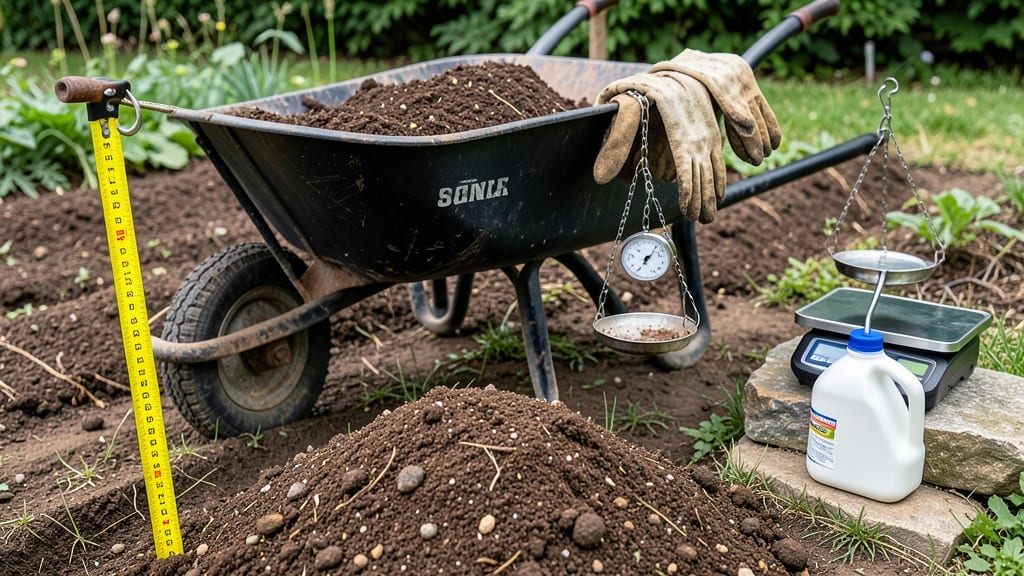
One yard of topsoil typically weighs between 1,500 to 2,000 pounds when dry, but moisture content can increase this to 2,500–3,000 pounds when saturated, making accurate weight estimates critical for delivery and project planning.
Understanding how moisture levels impact topsoil weight is key to avoiding project delays.
When soil is bone-dry, the weight stays in that 1,500–2,000 lb range, but even a light rain can add hundreds of pounds by filling those tiny air pockets between particles. 💧 For example, a freshly tilled garden bed might feel light when dry but become surprisingly heavy after watering—this is why contractors always overestimate by 10–15% for wet conditions.
The difference isn't just about lifting capacity; it affects everything from truckload calculations to foundation prep for raised beds.
Here's a pro tip: if you're ordering topsoil for a large project, ask your supplier about the moisture content at delivery. Some companies offer "dry weight" guarantees, while others adjust prices based on saturation levels.
I once had a client whose lawn topdressing job doubled in weight overnight after a storm—his truck couldn't even make it up the driveway! Always check the weather forecast before scheduling deliveries to account for these fluctuations.
💡 In This Article
- How Moisture Affects Topsoil Weight
- Calculating Topsoil Weight for Gardening Projects
How moisture affects topsoil weight
Topsoil's weight isn't just about the dirt itself—it's a complex interplay of mineral particles, organic matter, and the air or water occupying the spaces between them. When dry, topsoil contains about 25-40% air by volume, which keeps the weight in that 1,500-2,000 lb range per cubic yard.
But here's the science: soil particles have tiny pores that act like microscopic sponges. When moisture enters, it displaces air and fills these voids, dramatically increasing density.
A saturated yard of topsoil can hold up to 50% more water by weight than its dry state, pushing the total to 2,500-3,000 lbs. 💧
The key factor is porosity—the percentage of void space in soil. Sandy soils have larger pores and drain quickly, while clay soils hold water tightly.
For example, a cubic yard of sandy topsoil might only gain 500 lbs when saturated, but the same volume of clay-heavy soil could absorb 1,000 lbs or more of water. Organic matter also plays a role: compost-rich soils can absorb 20-30% more water than mineral-only mixes, further increasing weight.
This is why landscape professionals always specify soil types when estimating deliveries.
What most people don't realize is how temperature affects moisture retention. Cool soil holds water better than warm soil—this is why winter deliveries often weigh more than summer ones. During hot weather, evaporation rates can reduce moisture content by 10-15% in just 24 hours, lightening the load significantly.
I've seen contractors adjust their truck scales by 10-15% seasonally to account for these natural fluctuations. Even a 5% moisture change can mean 100+ lbs difference in a single cubic yard. 🌡️
Here's another critical detail: the compaction factor. When soil is tilled or moved, particles pack more tightly, reducing air pockets and increasing density.
A freshly delivered yard of topsoil might weigh 1,800 lbs when loose, but after spreading and compacting for a garden bed, the same volume could weigh 2,200 lbs.
This is why professional landscapers always specify whether they need "loose" or "compacted" weight estimates—it can affect equipment needs and project costs.
For practical purposes, consider this rule of thumb: every 1% increase in moisture content adds about 20-30 lbs per cubic yard. That means going from 10% to 20% moisture could add 200-400 lbs to your delivery.
This variation is why suppliers often include moisture content clauses in their contracts—it's not just about the dirt, it's about the water it's carrying. 💦
The bottom line? Moisture isn't just an afterthought—it's the variable that makes topsoil weight estimates an art as much as a science. Always check with your supplier about current moisture levels before ordering, especially for large projects where weight can impact everything from truck capacity to foundation stability.
A little preparation can save you from costly surprises when the soil arrives heavier (or lighter) than expected.