
Planting
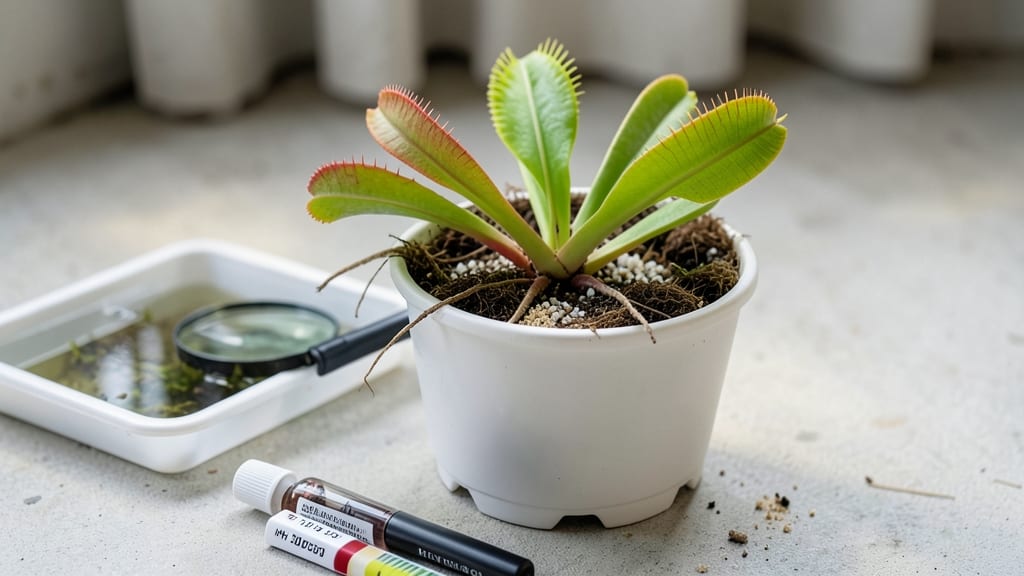
The right soil for a Venus flytrap 🪰 is the secret weapon between a thriving carnivore and a sad, yellowing plant that refuses to snap.
Picture this: you’ve just brought home your first Venus Flytrap, ready to watch those traps snap shut on unsuspecting gnats. But after weeks of patience, nothing happens. The problem?
Most garden soil is a death sentence for these picky plants. They need a mix that mimics their boggy, acidic home—something light, airy, and low in nutrients.
This isn’t just about throwing together some peat moss and calling it a day. The perfect blend keeps roots oxygenated, maintains the right acidic pH (3.5–5.5), and prevents the two biggest killers: waterlogging and mold.
Get it wrong, and you’ll spend months troubleshooting weak traps or mushy leaves instead of enjoying your plant’s carnivorous magic.
In this guide, I’ll walk you through the exact mix to use, how to avoid common mistakes, and even how to tweak your setup for different seasons. By the end, your Venus Flytrap will be snapping shut like a well-oiled trap—literally.
The perfect acidic peat moss soil mix for Venus fly traps
Venus flytraps thrive in a low-nutrient, acidic soil mix that mimics their native bog habitats. The ideal pH range of 3.5–5.5 is critical—any higher, and your plant will suffer from nutrient overload or fungal infections.
Most garden soils are too alkaline and packed with organic matter, which can suffocate these delicate carnivores. That’s why a peat moss-based blend is non-negotiable for their survival.
Commercial potting mixes often contain compost, fertilizer, or perlite-heavy blends that disrupt the delicate balance Venus flytraps need. Even "carnivorous plant mixes" sometimes include sphagnum moss substitutes that don’t replicate the airy, moisture-retentive structure of pure peat.
For best results, I recommend creating your own DIY acidic mix with precise ratios of peat moss, perlite, and sand.
Why peat moss? It holds moisture while allowing oxygen to reach roots—a perfect balance for bog plants. The acidic nature (pH 3.5–4.5) prevents nutrient buildup, which would "burn" the flytrap’s sensitive roots. Perlite adds aeration, while coarse sand prevents compaction. Together, they create a breathable, sterile environment that mimics their swampy home.
| Component | Ratio | Purpose |
|---|---|---|
| Sphagnum Peat Moss | 60% | Holds moisture, maintains acidity |
| Perlite | 20% | Prevents compaction, improves drainage |
| Coarse Sand | 20% | Enhances aeration, mimics bog texture |
| pH Range | 3.5–5.5 | Critical for nutrient absorption |
To create your DIY Venus flytrap mix, start by measuring out 3 parts peat moss to 1 part perlite and 1 part coarse sand. Mix them thoroughly in a clean container—never use garden soil or compost, as these introduce harmful microbes and nutrients.
For a 5-inch pot, you’ll need about 2 cups of mix. If you’re repotting, sterilize your hands and tools with rubbing alcohol to avoid contamination.
After mixing, test the pH using a digital pH meter (avoid soil test kits—they’re inaccurate for carnivorous plants). If the pH reads above 5.5, add a pinch of sphagnum peat moss or carnivorous plant fertilizer (like Flyminer) to lower it.
Never use lime or alkaline amendments—they’ll kill your flytrap instantly. Aim for a consistent pH of 4.0–5.0 for optimal growth.
One common mistake is over-moistening the mix before planting. Peat moss holds water, but it must still drain freely. After adding your mix to the pot, water it lightly with distilled or rainwater (never tap water, which contains minerals).
The soil should feel damp like a wrung-out sponge, not soggy. Let it sit for 10 minutes before planting your Venus flytrap to ensure excess water drains away.
For long-term success, refresh your soil mix every 1–2 years. Over time, peat moss breaks down and loses its acidity. Replace 50% of the mix annually with fresh peat moss to maintain the ideal conditions.
Store extra mix in a sealed container to preserve its moisture and acidity. Avoid storing it near heat sources, as this can alter the pH and structure.
If you’re struggling to find pure sphagnum peat moss, look for "rebloom" or "carnivorous plant mixes" at specialty stores. Brands like Sun Bulb Supply or Carnivorous Plant Supply sell pre-mixed blends, but always check the pH before use.
For a budget-friendly alternative, blend coconut coir with perlite (50/50), though this may require more frequent pH adjustments.
Remember, the key to Venus flytrap success lies in replication—mimic the acidic, boggy, low-nutrient conditions of their Carolina wetlands. With the right soil mix, your plant will reward you with vibrant traps and rapid growth, ready to snap up unsuspecting insects in no time. 🪰
Common soil mistakes that kill Venus fly traps (and how to fix them)
Even with the right watering routine, your Venus flytrap can still wither if the soil is wrong. These carnivorous plants demand a low-nutrient, acidic environment that mimics their Carolina bog habitat.
One wrong move—like using garden soil or overloading on organic matter—can trigger root rot, weak traps, or yellowing leaves within weeks.
I’ve seen beginners make these same mistakes repeatedly, and the results are heartbreaking. The good news? Most soil issues are reversible with the right adjustments. Let’s diagnose the five fatal soil errors and fix them before your plant’s traps turn limp and lifeless.
- Acidic (pH 3.5–5.5) – Neutral or alkaline soil = death
- Low in nutrients – Fertilizer or compost = root burn
- Well-draining – Compacted soil = suffocation
- Sterile – Pathogens thrive in unsterilized mixes
Your Venus flytrap’s leaves turn yellow? That’s often a sign of alkaline soil (pH above 5.5). These plants crave acidity like we crave coffee—without it, they can’t absorb nutrients.
Grab a pH testing kit (or use red cabbage juice as a DIY test) and aim for a reading between 3.5 and 5.5. If your soil is off, flush it with distilled water and remix with sphagnum peat moss or coconut coir.
Compacted soil is another silent killer. When you press the soil and it holds a shape, your Venus flytrap’s roots suffocate. The fix? Add coarse perlite or horticultural sand (20–30%) to improve aeration. Repot your plant into a terracotta pot with drainage holes—plastic traps moisture and encourages rot.
Overloading on organic matter—like compost or worm castings—feeds your plant too much. Venus flytraps don’t need nutrients; they get energy from insects! If your traps stop snapping or grow weak, flush the soil with distilled water for 2–3 weeks to leach out excess nutrients.
Replace the top 2 inches of soil with a fresh peat-perlite mix.
Mold or a musty smell? That’s a fungus party in your soil. Sterilize your mix by baking it at 200°F for 30 minutes or soaking it in a 10% hydrogen peroxide solution for 10 minutes. Let it dry completely before repotting. Always use sterilized tools to avoid reintroducing pathogens.
Here’s your quick-fix flowchart for soil issues:
- Yellow leaves → Test pH, add peat moss.
- Weak traps → Flush soil, reduce nutrients.
- Moldy soil → Sterilize mix, improve drainage.
- Root rot → Repot in fresh mix, trim dead roots.
- Slow growth → Increase perlite, check sunlight.