
How To
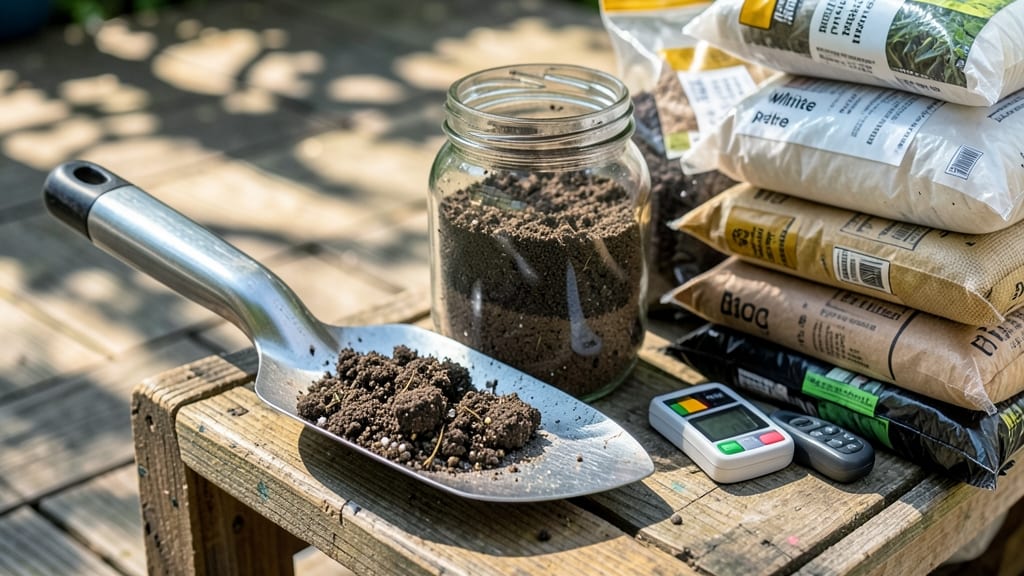
When your garden soil holds water like a sponge, even the right plants suffocate and drown—but soil amendments for drainage can turn that around.
Roots need air as much as water, and the fix isn’t just adding sand (that’s a myth I learned the hard way), but creating an air-pocket rich blend that lets water drain while keeping nutrients in place.
My first attempt with pure sand turned my tomato bed into a swamp, but this method actually works.
Start with a 50-50 mix of your existing soil and coarse organic matter—think composted leaves, coconut coir, or shredded bark—plus 10-20% perlite or vermiculite for those critical air gaps.
Heavy clay? Add 1 part sand (but not playground sand—builder’s sand only). The goal is 30-40% porosity, not just dumping materials and hoping for the best.
You’ll see the difference immediately: water beads up instead of pooling, and roots spread freely. No more yellowing leaves or that rotten-egg smell of waterlogged soil. For containers, pre-mix your amendment blend before planting—it’s the only way to avoid pockets of compacted dirt that defeat the whole purpose.
Pro tip: Test your work by filling a jar with soil, water, and shaking. If water drains in 10-30 seconds, you’ve nailed it. Too fast? Add compost.
Too slow? More perlite. Every plant has its sweet spot—succulents need 60% air, while tomatoes thrive at 40%. Adjust as you go.
📚 In This Guide
- What you need
- Instructions
- Tips and common mistakes
- Wrapping up and next steps
What you need
- ● Organic Matter: Compost (2–3 inches per 12" of soil depth) – boosts structure and microbial life
- ● Peat moss or coconut coir (1–2 bags per 10 sq. ft.) – lightens heavy clay
- ○ Leaf mold (optional, 1–2 inches) – improves aeration over time
- ● Inorganic Amendments: Perlite (5–10 lbs per 10 sq. ft.) – adds air pockets
- ● Pumice or coarse sand (10–20 lbs per 10 sq. ft.) – prevents compaction
- ○ Horticultural grit (optional, 5 lbs per 10 sq. ft.) – for ultra-fine drainage control
- ● Soil Conditioners: Gypsum (5–10 lbs per 10 sq. ft.) – breaks up clay without altering pH
- ○ Biochar (optional, 2–3 lbs per 10 sq. ft.) – enhances water retention and drainage
- ● Garden fork or broadfork (for aerating compacted soil)
- ● Shovel and garden rake (to mix amendments evenly)
- ● Wheelbarrow or large container (for hauling materials)
- ○ Soil test kit (optional but highly recommended – check pH and clay content first!)
- ● Gloves and knee pads (because comfort matters 😉)
- ● Test your soil’s drainage first! Dig a 12" hole, fill it with water, and time how long it takes to drain. If it’s slower than 4 hours, you’ve got work to do.
- ● Choose a dry day for amending—wet soil compacts easily and washes away amendments.
- ● Work in layers if your soil is extremely dense: Start with coarse materials (gravel/sand), then blend finer amendments.
How to improve soil drainage for healthier root systems
Creating an air-pocket rich blend transforms compacted soil into a thriving environment where roots can breathe and expand.
Assess Your Soil’s Current Drainage
Start by testing your soil’s drainage naturally. Dig a hole about 6 inches deep and fill it halfway with water. If the water drains completely within 2-4 hours, your soil is already well-draining. If it remains soggy after 6 hours, you’ll need significant amendments.
Run a handful of moist soil through your fingers—if it forms a tight clump that doesn’t crumble easily, it’s too dense. Clay-heavy soils or those with high organic matter content often hold too much water. This test reveals where to focus your amendments for optimal root health.
Choose the Right Amendments for Your Soil Type
For heavy clay soils, blend in 50% coarse sand or perlite to create larger air pockets. Organic matter like compost or peat moss improves water retention without suffocating roots, while gritty materials like pumice or vermiculite enhance aeration. I recommend a 20-30% amendment ratio—too much sand can wash away nutrients, and too much organic matter can compact over time.
If your soil is sandy and drains too quickly, focus on 2-3 inches of compost or coconut coir mixed into the top 6 inches of soil. This retains moisture while preventing compaction. For container gardens, pre-mix amendments into potting soil to ensure even distribution throughout the root zone.
Amend the Soil in Layers for Even Distribution
Remove the top 6 inches of existing soil and set it aside—this layer often contains the most compaction. Spread a 1-inch layer of coarse sand or perlite over the base, then add a 2-inch layer of compost or organic matter. Mix these amendments into the top 6 inches of remaining soil using a garden fork or tiller, breaking up any remaining clumps.
For established gardens, top-dress with 1-2 inches of compost annually to gradually improve drainage over time. Avoid tilling too deeply—roots need stable soil structure below 6 inches. Water the amended area thoroughly to help materials settle and eliminate air pockets.
Test and Adjust for Optimal Drainage
Re-test drainage after amending by filling the hole with water again. Ideal drainage should take 30-60 minutes to fully absorb. If water pools on the surface, add more coarse material like perlite or pumice. If it drains too quickly, increase organic matter to retain moisture without suffocating roots.
Monitor plant response over 2-4 weeks. Healthy roots will show signs of growth—new leaves, sturdy stems, and vibrant color. If plants still struggle, consider adding mycorrhizal fungi to boost root health in amended soil. This final step ensures your amendments are working effectively for long-term root vitality.
Tips & tricks for perfect soil drainage amendments
Transforming compacted soil into a root-friendly environment takes precision—and these insights will help you avoid common pitfalls while maximizing effectiveness.
Soil Test Accuracy: The 2-4 hour drainage test in Step 1 is your baseline, but don't rely solely on time. After pouring water into your 6-inch hole, use your finger to check moisture at different depths—if the bottom remains damp while the top drains quickly, you're dealing with a layered compaction issue that requires deeper amendments. For clay-heavy soils, consider adding coarse sand or perlite in 1-inch increments until you reach the 6-inch depth specified in Step 3.
Amendment Ratio Precision: When blending amendments in Step 2, think of the 20-30% ratio as a starting point rather than a strict rule. For container gardens where you're pre-mixing into potting soil, reduce the coarse material to 15%—the confined space needs more organic matter to prevent compaction. Test your mix by squeezing a handful: it should hold shape but crumble easily when pressed, like damp sand at the beach.
Layering Technique: The 1-inch coarse material layer followed by 2-inch organic layer in Step 3 creates the perfect gradient for root expansion. For established gardens where you're top-dressing with 1-2 inches of compost annually, focus on the top 3 inches of soil—this is where most root activity occurs. Use a garden fork to gently loosen the soil without disturbing deeper layers where roots need stability.
Post-Amendment Monitoring: After your 30-60 minute drainage test in Step 4, observe how water moves through the soil. If you see channels forming where water rushes through, your amendments aren't distributing evenly—this often happens when coarse materials settle too quickly. To fix this, mix in an additional 1/2 inch of compost with your next application to create a more uniform structure.
Pro Tips for Soil Amendments For Drainage
- Transforming compacted soil into a root-friendly environment takes precision—and these insights will help you avoid common pitfalls while maximizing effectiveness.
- Soil Test Accuracy: The 2-4 hour drainage test in Step 1 is your baseline, but don't rely solely on time.
- Amendment Ratio Precision: When blending amendments in Step 2, think of the 20-30% ratio as a starting point rather than a strict rule.
Frequently asked questions
Got questions about improving drainage with soil amendments? You’re not alone! Here are some of the most common concerns—and their straightforward solutions—to help you get it right.
What are the best soil amendments for heavy clay soil?
For clay-heavy soil, focus on organic matter like compost, coarse sand (like perlite or coarse builder’s sand), and gypsum to break up compaction. Peat moss or pine bark fines also work well to improve aeration and water flow. Aim for a mix that’s 30-50% organic to see noticeable results.
How long does it take for soil amendments to improve drainage?
Patience is key! Most amendments start working within a few weeks, but full benefits may take 3-6 months, especially for compacted clay. Test your soil’s drainage after 1-2 months by digging a small hole, filling it with water, and timing how long it takes to drain. If it’s still slow, add more sand or organic matter.
Are there affordable alternatives to commercial soil amendments?
Skip the store-bought options and try free or low-cost amendments like:
- Leaf mold (decomposed leaves)
- Wood chips or sawdust (aged, not fresh)
- Crushed eggshells or coffee grounds (for minor aeration)
- Manure (composted!) from local farms
What if my plants still struggle after amending the soil?
If drainage isn’t improving, check for hidden issues like:
- Poor topsoil depth (add 6+ inches of amended soil)
- Underground clay layers (consider raised beds or French drains)
- Overwatering (let soil dry between waterings)
Can I use the same amendments for both gardens and potted plants?
Most amendments work for both, but adjust the ratios:
- Garden beds: Use 50% native soil + 50% amendments (e.g., compost + sand).
- Potted plants: Go 60-70% amendments (like perlite + coconut coir) for faster drainage.
Wrapping up and next steps
Improving soil drainage with the right amendments isn’t just about fixing waterlogged patches—it’s about unlocking the full potential of your plants’ root systems. 🌱 From sand and perlite to compost and biochar, each amendment plays a key role in creating an air-pocket-rich blend that promotes healthier roots and stronger growth.
Whether you’re tending to a garden bed or container plants, the secret to success lies in testing, layering, and patience.
Ready to transform your soil? Start small—pick one amendment to test in a troublesome area, monitor the results, and gradually expand your approach. Your plants (and future harvests) will thank you! 🌿