
How To
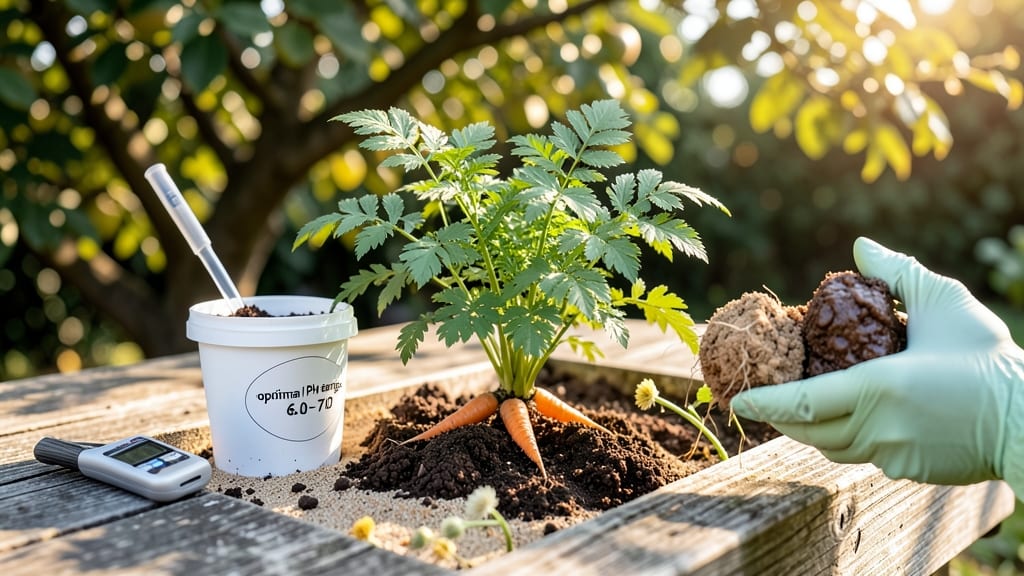
The carrot optimal soil pH range isn’t just a number—it’s the secret to growing roots that are straight, sweet, and free of forks or bitter flavors. 🌱 I learned this the hard way when my first batch turned woody and stunted, despite perfect watering and sunlight.
Turns out, even the best seeds need the right soil chemistry to thrive. Carrots prefer a slightly acidic to neutral pH of 6.0–7.0, where nutrients like phosphorus and potassium become available for root development.
Too low (below 5.5) locks out essential minerals, while too high (above 7.5) causes nutrient imbalances that lead to poor growth or even blossom-end rot. The goal? A balanced soil that lets your carrots focus on growing long, tender roots instead of struggling to access what they need.
Testing your soil is simple: grab a pH kit or send a sample to your local extension office. If adjustments are needed, organic matter like compost or aged manure gently shifts the pH over time—no harsh chemicals required. The payoff?
Crisp, flavorful carrots that pull out cleanly, with no bitter aftertaste or gnarled shapes. This range works for all carrot varieties, from heirloom Danvers to rainbow chardons. The key is consistency: monitor soil pH every season, especially if you’re growing in containers or heavy clay.
Small tweaks now mean a harvest you’ll actually want to eat.
📚 In This Guide
- What you need
- Instructions
- Tips and common mistakes
- Wrapping up and next steps
What you need
- ● Soil test kit – Digital or lab-based (e.g., Luster Leaf Rapitest for quick results).
- ● Garden lime (calcium carbonate) – 1–2 lbs per 100 sq ft (if soil pH < 5.8).
- ● Sulfur (elemental or powdered) – ½–1 lb per 100 sq ft (if soil pH > 6.8).
- ● Compost or well-aged manure – 2–3 inches mixed into top 6 inches of soil (boosts organic matter and buffers pH).
- ● Carrot seeds – Organic, non-GMO (e.g., Nantes or Danvers varieties for best results).
- ● Garden fork or tiller – For loosening soil to 12–18 inches deep (carrots need room to grow!).
- ● pH adjustment calculator – Free online tools (e.g., Garden Guides) to measure lime/sulfur needs.
- ● Soil pH meter – Handheld, battery-operated (e.g., Bluelab Soil pH Meter for precision).
- ● pH strips – Quick but less accurate (good for rough checks).
- ● Wooden dowel or stick – For marking soil depth when planting seeds.
- ● Organic mulch (straw or grass clippings) – 2–3 inches thick to retain moisture and stabilize pH.
- ● Test soil in spring or early fall (avoid testing after rain or fertilization).
- ● Choose a sunny spot with 6+ hours of sunlight daily.
- ● Ensure soil is loose and free of rocks/clods (carrots hate resistance!).
- ● Wait 2–4 weeks after amending soil before planting seeds.
How to test and adjust soil pH for perfect carrot growth
Carrots thrive when soil pH is just right—here's how to check and fine-tune yours for sweet, straight roots.
🌱 Step 1: Test Your Current Soil pH
Carrots prefer a slightly acidic to neutral range of 6.0 to 6.8. Grab a soil pH test kit (digital or liquid) and follow the instructions to collect a sample from 6 inches deep—that's where carrot roots will grow. Moisten the soil with distilled water (tap water can skew results) and wait 10-15 minutes for the reading.
If your pH is outside the ideal range, don't panic—most garden soils need minor adjustments. For example, if your test shows 7.2 (alkaline), you'll need to lower the pH slightly. If it's 5.5 (acidic), you'll need to raise it. I like to test 3 spots in my garden since pH can vary even in small areas.
💧 Step 2: Lower pH for Acidic-Loving Soil
To lower pH (make soil more acidic), mix elemental sulfur into the top 6 inches of soil at a rate of 1 pound per 100 square feet. Work it in gently with a garden fork or tiller. Sulfur takes 2-3 weeks to react, so test again after that period before planting. You'll notice the soil feels slightly lighter and less clumpy after mixing.
For faster results, you can use peat moss or pine needles as organic amendments. Spread a 2-inch layer over the soil surface and lightly till it in. This method is slower but improves soil structure too. Avoid overdoing it—carrots won't tolerate pH below 5.5, and roots may become stunted or bitter.
☀️ Step 3: Raise pH for Alkaline Soil
To raise pH (make soil less acidic), sprinkle wood ash or hydrated lime over the soil. Use 5 pounds of wood ash per 100 square feet or 20 pounds of hydrated lime per 100 square feet. Work it into the top 6 inches and water thoroughly. Test again in 2-3 weeks—lime takes longer to adjust pH than sulfur.
I prefer wood ash because it adds potassium too, which helps root development. Just be cautious—too much lime can make the soil too alkaline (above 7.0), causing carrot roots to split or develop forked shapes. Always test after adjusting and wait at least 2 weeks before planting to let the amendments settle.
🌿 Step 4: Maintain Ideal pH During Growth
Carrots are sensitive to pH changes, so monitor soil conditions throughout the season. If you notice yellowing leaves (a sign of iron deficiency, common in alkaline soil), add a chelated iron supplement according to package instructions. For purple tops (a sign of phosphorus deficiency), a light application of bone meal can help.
Mulch with compost every 4-6 weeks to keep the soil pH stable. Compost naturally buffers pH swings and adds organic matter, which improves soil structure. Avoid fresh manure—it can spike nitrogen levels and throw off pH balance. Instead, use well-aged compost and water deeply after applying to help nutrients settle.
Tips & tricks for perfect carrot soil pH balance
Getting your soil pH just right for carrots is half the battle—here's how to avoid common pitfalls and get the most out of your test results.
Precision Testing: For the most accurate reading in Step 1, collect samples from 3 different spots in your garden—especially if you've noticed uneven growth in previous plantings. I've seen pH vary by 0.5 points just a few feet apart! Take an average of your readings to get the true picture of your soil's condition. The 10-15 minute wait time is crucial—don't rush it, as even slight delays can affect accuracy.
Timing is Everything: When adjusting pH in Steps 2 and 3, remember that sulfur takes 2-3 weeks to work, while lime can take even longer. Mark your calendar and test again after the recommended time—this is where many gardeners get impatient and overcorrect. A quick tip: If you're short on time, peat moss gives you faster results than sulfur, though it won't lower pH as dramatically.
Application Technique: In Step 3, when using wood ash or hydrated lime, don't just sprinkle it on top and walk away. Work these amendments into the top 6 inches of soil where your carrot roots will grow. I like to use a garden fork to gently mix it in—this ensures even distribution and prevents localized pH spikes that could cause root deformities.
Ongoing Monitoring: The 4-6 week compost mulching in Step 4 isn't just about maintaining pH—it's also your early warning system. If you notice yellowing leaves between mulching sessions, that's your soil crying out for help. Keep a small notebook by your garden to track when you last mulched and any symptoms you observe—it becomes your personal soil health diary over time.
Pro Tips for Carrot Optimal Soil Ph Range
- Getting your soil pH just right for carrots is half the battle—here's how to avoid common pitfalls and get the most out of your test results.
- Precision Testing: For the most accurate reading in Step 1, collect samples from 3 different spots in your garden—especially if you've noticed uneven growth in previous plantings.
- Timing is Everything: When adjusting pH in Steps 2 and 3, remember that sulfur takes 2-3 weeks to work, while lime can take even longer.
Frequently asked questions
Got questions about getting the perfect soil pH for carrots? You’re in the right place! Here are answers to the most common queries—no fluff, just actionable insights to help your carrots thrive.
What happens if my soil pH is too high or too low for carrots?
Carrots are super sensitive to pH extremes. If your soil is too acidic (below 6.0), they’ll struggle to absorb key nutrients like phosphorus, leading to stunted growth or bitter flavors. Too alkaline (above 7.0)? Iron and zinc become locked away, causing yellowing leaves or forked roots. Aim for 6.0–7.0 to avoid these pitfalls.
How long does it take to adjust soil pH for carrots?
Patience is key! Amending soil takes 4–8 weeks to show noticeable pH changes. For quick fixes (like lime for acidity or sulfur for alkalinity), test soil every 2 weeks. Organic matter (compost, peat moss) also helps buffer pH over time—mix it in 3–4 months before planting for best results.
Can I grow carrots in soil outside the 6.0–7.0 pH range?
Yes, but with workarounds. If your soil is too acidic, add pelletized lime (follow package rates). For alkaline soil, incorporate elemental sulfur or pine needles. Container gardening gives you control—use a soil mix with peat moss to tweak pH before planting.
Why are my carrot leaves turning yellow, even though my pH is in range?
Yellow leaves can signal nutrient deficiencies (like nitrogen or magnesium) or overwatering. Double-check:
- Nitrogen: Add compost or a balanced fertilizer.
- Magnesium: Use Epsom salt (1 tbsp/gallon of water).
- Drainage: Carrots hate soggy soil—ensure containers or beds have holes.
Are there carrot varieties that tolerate less-than-ideal pH?
Some varieties are more forgiving than others. Try:
- ‘Paris Market’ or ‘Danvers’: Handle slightly acidic soil (pH 5.5–6.5) better.
- ‘Nantes’: More adaptable to alkaline conditions (up to pH 7.5) but still prefer 6.0–7.0.
Wrapping up and next steps
Mastering the carrot optimal soil pH range (6.0–7.0) is your secret weapon for growing vibrant, sweet roots! By testing, amending, and maintaining your soil’s balance, you’re already ahead of the game—whether you’re a seasoned gardener or just starting out. 🌱
Ready to take the next step? Grab a soil test kit and monitor your progress. Small tweaks today can lead to a bountiful harvest tomorrow—happy growing!