
Neem Oil
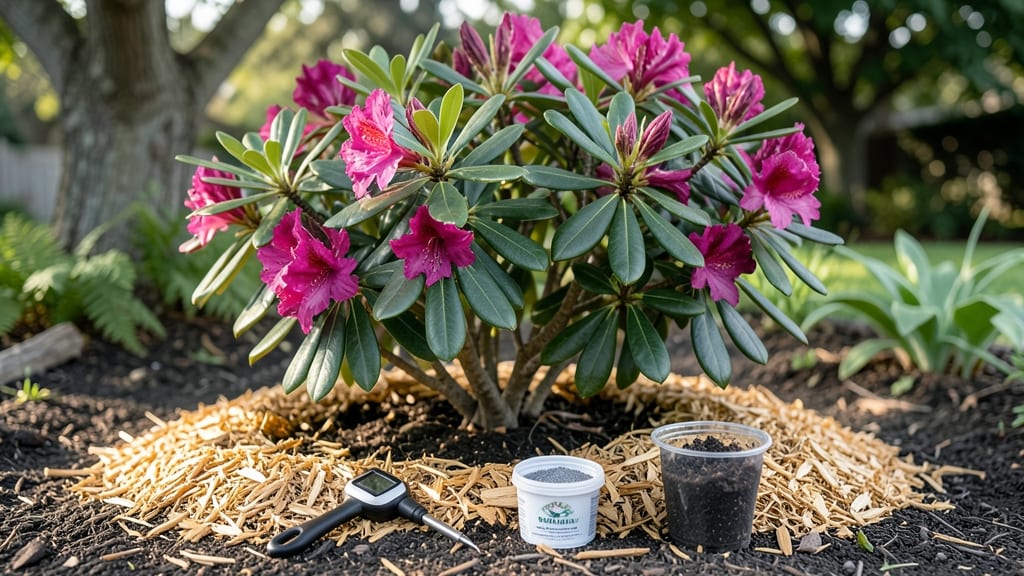
Azalea soil acidity must stay between 4.5 and 5.5 pH for optimal growth, as these acid-loving plants rely on low pH to absorb essential nutrients like iron and manganese efficiently. Regular testing with a soil pH meter or lab kit ensures proper acidity levels for healthy blooms and foliage.
Azaleas absolutely refuse to thrive in alkaline soil—think of it as their version of a diet restriction. 🌿 The ideal acidic range (4.5-5.5) isn't just a preference; it's a biological necessity.
At higher pH levels, iron becomes locked away in forms the plant can't access, causing those dreaded yellow leaves (iron chlorosis) even when your soil looks rich. What's fascinating is how these plants actively acidify their root zones through natural chemical processes, creating the perfect micro-environment for nutrient uptake.
Most gardeners overlook the fact that soil pH naturally drifts upward over time due to organic matter breakdown and mineral weathering. That's why I recommend testing every spring before blooming season—it gives you time to make adjustments if needed.
For existing gardens, elemental sulfur or peat moss are the go-to amendments, but timing matters: apply in fall for gradual acidification, never during active growth when roots are most sensitive.
💡 In This Article
- Why Azaleas Thrive in Acidic Soil
- How to Adjust and Maintain Azalea Soil pH
Why azaleas thrive in acidic soil
Azaleas belong to the Rhododendron family, which has evolved to thrive in acidic forest floors where organic matter decomposes slowly, creating naturally low pH conditions. The key mechanism is how acidic soils prevent essential nutrients like iron and manganese from becoming chemically bound to soil particles.
At pH levels above 5.5, these nutrients precipitate out of solution, becoming unavailable to plant roots. This is why you'll often see azaleas with yellow leaves in alkaline soils—even when the soil appears fertile.
The plant's roots actively contribute to this acidity through a process called proton extrusion, where hydrogen ions (H+) are pumped into the rhizosphere (root zone) to lower pH locally. This creates an optimal 4.5-5.5 pH micro-environment where nutrient solubility is maximized.
Interestingly, azaleas also form symbiotic relationships with mycorrhizal fungi that thrive in acidic conditions, helping extend their root systems to access even more nutrients. Without this acidic environment, these beneficial fungi can't establish properly, further limiting nutrient uptake.
What's particularly fascinating is how azaleas handle aluminum toxicity—a common concern in acidic soils. While most plants would suffer, azaleas have developed mechanisms to exclude aluminum from their root cells while still benefiting from the acidic conditions that make other nutrients available.
This specialized adaptation explains why they can't tolerate even slightly alkaline soils without showing stress symptoms like stunted growth or leaf discoloration.
Consider this: In a pH 6.0 soil (just slightly alkaline), iron availability drops by 90% compared to pH 5.0.
That's why those vibrant red blooms you love are actually a visual indicator of proper nutrient uptake—when iron and manganese are accessible, the plant can produce its signature pigments and maintain robust foliage.
The connection between soil acidity and plant health isn't just theoretical; it's visible in every leaf and bloom.
For gardeners, understanding this science translates directly to care practices. When you see those telltale yellow leaves between the veins (a classic iron chlorosis symptom), it's not just about adding more iron fertilizer—it's about lowering the pH to make the iron already present in your soil accessible.
This fundamental principle explains why azaleas often struggle in newly constructed landscapes where soil pH hasn't been properly tested and adjusted.
One practical example: In my own garden, I had an azalea that refused to bloom for years. After testing, we discovered the soil pH was 6.8—far too alkaline.
Simply adding elemental sulfur to lower the pH by 0.5 points per application (with proper irrigation) transformed the plant within a single growing season. The difference in growth vigor and flowering was dramatic, proving how critical this acidity range truly is.